
Three dates to track in a record
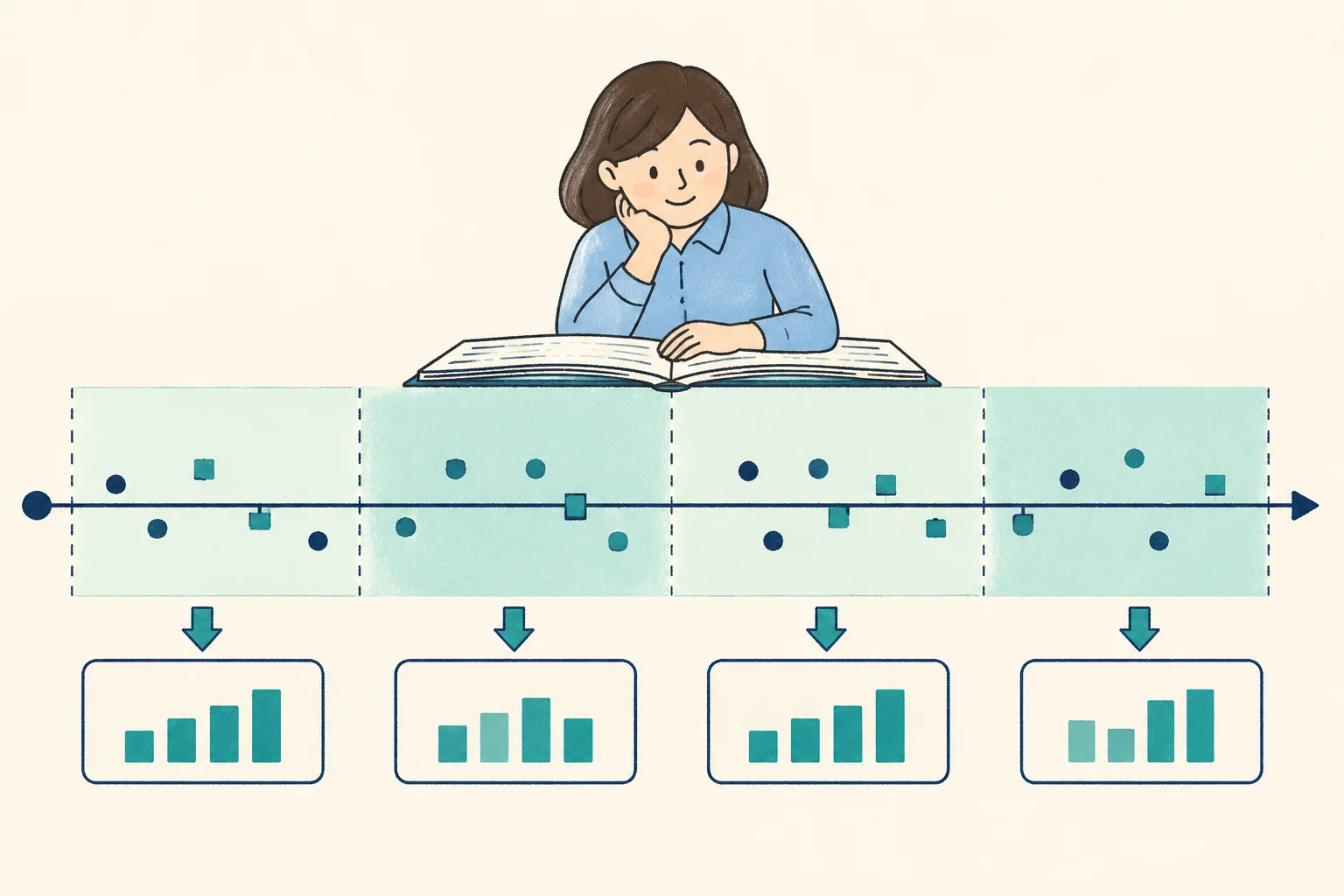
A recurring record has a timeline, not a single date. The expected date marks when an entry is scheduled; the recorded date marks when it appears in the records; and the reporting window determines which dates a report includes. Keeping those roles separate makes monthly reviews far less confusing.
Use the fictional exercises below to practise reading that timeline. The dates and amounts are invented for learning and are not evidence that any payment took place. Each timeline is a conceptual example, not a capture of financial software.
Exercise 1: a monthly entry
A fictional household record repeats on the 12th of each month. For April, the expected date is April 12, the recorded date is April 12, and the reporting window is April 1–30.
See the worked explanation
Both dates fall inside the April window, so the entry is expected and recorded within the same reporting period. The matching dates do not prove a real transaction; they simply make this practice example easy to follow.
Exercise 2: a delayed recording date
In a second fictional record, the entry is expected on May 29 but is recorded on June 2. Compare it against two windows: May 1–31 and June 1–30.
See the worked explanation
The expected date falls in May, while the recorded date falls in June. A view based on expected dates can therefore place the entry in May; a view based on recorded dates can place it in June. Check which date a report uses before interpreting a period total.
Exercise 3: near a quarter boundary
A fictional quarterly review covers July 1–September 30. One recurring entry is expected September 30 and recorded October 1, immediately after the quarter closes.
See the worked explanation
The expected date belongs to the July–September quarter, but the recorded date belongs to October. A report using recorded dates may show the entry in the next quarter. When comparing quarter summaries, identify the date basis and the exact window boundaries first.
For a real review, write down the recurrence date, the date shown in the record, and the report’s start and end dates. Then compare each date with the window instead of assuming that a monthly or quarterly label answers the question by itself.